Few phrases make a homeowner more nervous than "your sewer line needs to be replaced." Right away, you picture a torn up yard and a long, messy project. Sewer line replacement in Salt Lake City does not always look like that, though, and understanding your options makes the decision much easier.
At Huskies Leak Detection, we handle sewer, excavation, and plumbing work across Salt Lake City and Northern Utah. We help homeowners figure out what their line actually needs before any digging starts.
Below, we explain the signs of a failing sewer line and how trenchless and traditional replacement compare.
Signs Your Sewer Line Needs Replacing
A sewer line can fail slowly for years before it becomes an emergency. Catching the warning signs early gives you more options and more time to plan.
- Repeated backups in toilets, tubs, or floor drains, even after the line has been cleared
- Gurgling drains or toilets that bubble when another fixture runs
- Sewer odors inside the house or around the yard
- Soggy, sunken, or unusually green patches of lawn above the line
- Tree roots found during a drain cleaning or camera inspection
- Cracks, sagging, or collapsed sections shown on a sewer camera
One backup can be a simple clog. However, the same problem returning again and again usually points to damage in the pipe itself.
Why Older Salt Lake Homes See This Often
Many established Salt Lake City neighborhoods have mature trees and older sewer lines running under the yard. Over time, roots search for moisture and work their way into joints and small cracks. Soil movement from freeze and thaw cycles can also shift pipes out of alignment. Age, roots, and ground movement together are a common recipe for a failing line.
Traditional Excavation Explained
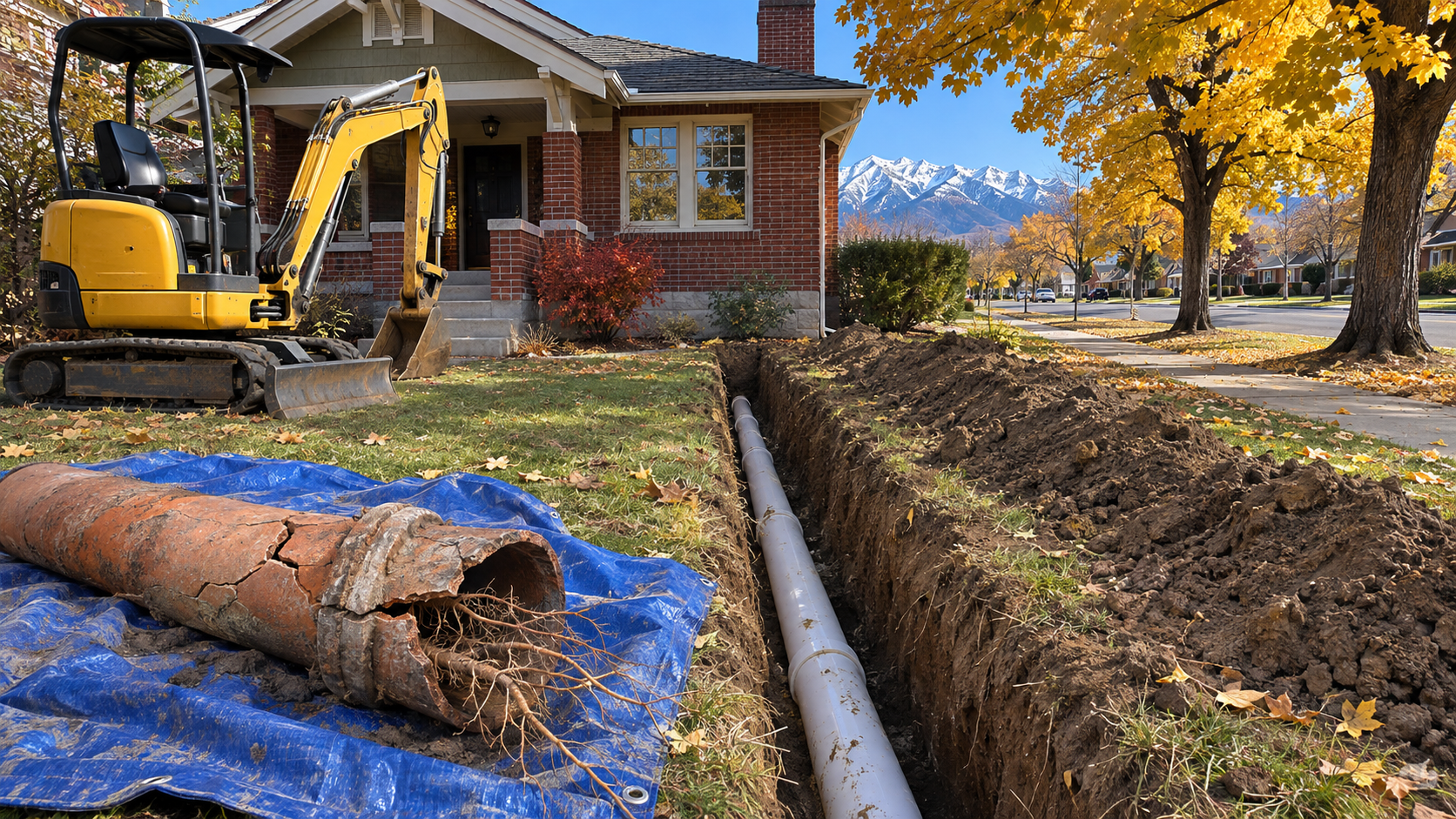
Traditional replacement is exactly what it sounds like. A trench is dug along the path of the sewer line, the old pipe is removed, and a new one is laid in its place. Afterward, the trench is backfilled and the surface is restored.
When Excavation Makes Sense
Digging is not the outdated option some people assume. In many cases, it is the right call:
- The line has collapsed or is badly out of alignment, so nothing can pass through it.
- The pipe has severe sags or bellies where waste collects.
- The line needs to be rerouted or its depth changed.
- Only a short section is damaged and is easy to reach.
What to Expect
The biggest trade off is disruption. Lawns, landscaping, driveways, or sidewalks above the line may need to be opened and restored. On the other hand, excavation gives the crew direct access to the pipe, so there is no guesswork about what is happening underground. Excavation is a core part of what we do, so we can handle the digging and the plumbing as one job.
Trenchless Replacement Explained
Trenchless methods replace or rehabilitate a sewer line with only small access points instead of one long trench. There are two main approaches.
Pipe Bursting
With pipe bursting, a bursting head is pulled through the old pipe. It breaks the old line apart while pulling a new pipe in behind it. As a result, the new line follows the same path without the ground above being dug up.
Pipe Lining
Pipe lining, often called cured in place pipe, works differently. A flexible liner coated with resin is placed inside the existing pipe and then hardened. Essentially, it creates a new pipe within the old one.
Benefits and Limits
The biggest advantage of trenchless work is less disruption to your yard, driveway, and landscaping. That can make a big difference when the line runs under mature trees, a patio, or hardscaping.
Still, trenchless is not right for every pipe. A fully collapsed line, a severe sag, or a pipe that needs rerouting may not be a good candidate. That is why an inspection always comes before any recommendation.
How to Decide Which Method Fits
The right method depends on the condition of your pipe, where it runs, and what sits above it. Nobody can make that call from the curb. It takes a look inside the line.
Start With a Camera Inspection
A sewer camera travels through the pipe and shows exactly what is going on. It reveals cracks, root intrusion, sags, offset joints, and collapsed sections. With that footage, the decision is based on evidence instead of guesswork.
Questions Worth Asking
Once you have seen the inspection, ask your plumber a few direct questions:
- Is the damage limited to one section, or does it run the whole length of the line?
- Is the pipe intact enough for a trenchless method?
- What will need to be dug up, and how will it be restored?
- Are permits required for this work in my city?
Clear answers help you compare options with confidence.
A Common Misconception
Many homeowners assume trenchless is always the better choice. In reality, the best method is simply the one that fits your pipe. Sometimes that is trenchless. Other times, a well planned excavation is the more reliable fix.
Frequently Asked Questions
How do I know if my sewer line needs to be replaced?
Repeated backups, gurgling drains, sewer odors, and soggy patches in the yard are common warning signs. A sewer camera inspection confirms whether the pipe is cracked, sagging, or collapsed. That footage shows whether repair or replacement is the right move.
What is the difference between trenchless and traditional sewer replacement?
Traditional replacement digs a trench along the line to remove and replace the pipe. Trenchless methods, such as pipe bursting or pipe lining, work through small access points instead. Trenchless causes less surface disruption but is not suitable for every pipe.
Is trenchless sewer replacement always possible?
No. A fully collapsed line, a severe sag, or a pipe that needs rerouting may require excavation. An inspection determines whether your line is a good candidate.
Will sewer line replacement damage my yard?
Traditional excavation does disturb the ground above the line, which is restored afterward. Trenchless methods limit digging to small access points. Your plumber should explain what will be opened before work begins.
Do I need a permit for sewer line replacement in Salt Lake City?
Sewer work often requires permits, and the rules depend on your city and the scope of the job. Your contractor should know the local requirements and handle them as part of the project.
What areas do you serve?
Huskies Leak Detection serves Salt Lake City and communities across Northern Utah, including Murray, Sandy, West Valley City, Draper, and Ogden. Call (385) 246-3560 to schedule an inspection.
A failing sewer line is stressful, but the right information takes a lot of the worry out of it. Whether your pipe needs a targeted repair, a trenchless approach, or a full excavation, it all starts with seeing what is really going on underground. Book a consultation with Huskies Leak Detection today, and we will help you choose the fix that fits your home and your yard.