A house fire is only part of the damage. Smoke and fire mitigation is what happens next. It often determines whether your home is salvageable or a total loss. At Huskies Leak Detection, we handle smoke and fire mitigation across Cottonwood Heights and the greater Salt Lake City area. The first 24 to 48 hours after a fire matter more than most homeowners realize.
What Smoke and Fire Mitigation Actually Involves
Mitigation is different from cleanup. Cleanup happens after the fact, once everything has already settled and set in. Mitigation happens fast, while there is still time to prevent permanent damage.
The goal is stopping secondary damage before it starts, not just addressing what the fire itself destroyed. Smoke residue, soot, and lingering odor can damage surfaces that never actually touched flame. Sometimes this damage runs worse than what the fire itself caused.
Why Timing Matters So Much
Smoke residue is acidic. The longer it sits on surfaces, the more permanent the damage becomes. Within hours, soot can etch into metal fixtures, discolor grout, and yellow painted walls.
Odor works the same way. Smoke particles work their way into drywall, insulation, and fabric. Wait too long, and no amount of cleaning fully removes that smell.
The First 24 Hours After a Fire
What happens immediately after a fire is out shapes the entire recovery process. A few steps matter more than homeowners expect.
* Ventilate the home as soon as it is safe to do so, opening windows and doors to reduce lingering smoke concentration
* Avoid touching soot covered surfaces with bare hands, since oils from skin can set soot into fabric and paint
* Do not attempt to clean fabric, upholstery, or electronics yourself before a professional assessment
* Photograph everything before any cleanup begins, for insurance documentation purposes
* Contact a mitigation company quickly, since the acidic nature of soot residue causes damage that compounds hour by hour
Smoke Damage vs. Fire Damage: They Are Not the Same
Homeowners often assume damage is limited to the rooms that actually burned. That assumption is usually wrong. Smoke travels through HVAC systems, ductwork, and even small gaps around doors, reaching rooms far from the original fire.
A fire in one room can leave smoke damage throughout an entire home. That includes areas that look completely untouched at first glance. This is why a full property assessment matters, not just an inspection of the room where the fire started.
What We Check During an Assessment
We inspect beyond the obvious burn area, checking HVAC systems, attic spaces, and adjoining rooms for smoke infiltration. Soot particles are small enough to travel through ductwork and settle in places you would never think to check.
Odor testing is part of this too. Even when visible soot looks minimal, trapped smoke odor can be a warning sign. Odor hiding in insulation or wall cavities often needs more thorough treatment than surface cleaning alone.
The Mitigation Process Step by Step
Once we arrive, the process starts with a full damage assessment and moisture check. Fire suppression efforts often leave significant water damage behind too.
Next comes soot and residue removal, using specialized cleaning agents designed for smoke damage specifically. Standard household cleaners often smear residue rather than lifting it, which makes the problem worse instead of better.
Odor Removal Comes Last, Not First
Many homeowners want odor addressed immediately, but effective odor removal has to happen after soot and residue are fully cleared. Masking a smell before removing the source that causes it never actually solves the problem.
Techniques like thermal fogging or ozone treatment work by neutralizing odor at a molecular level. But that only works once the underlying residue has been properly removed first.
Why Utah Homes Face Specific Fire Mitigation Challenges
Cottonwood Heights and the broader Salt Lake Valley see a real range of fire risk factors. Dry summer months bring wildfire smoke infiltration, while structure fires happen year round.
Wildfire smoke exposure is a growing concern here specifically. Even homes that were never near an active fire can accumulate smoke residue. Prolonged exposure to poor air quality days causes this, and it presents a different kind of mitigation challenge than a direct structure fire.
Insurance Documentation and Fire Mitigation
Insurance claims for fire damage move faster and more smoothly with proper documentation. Photograph damage before any cleanup begins, and keep a written record of the mitigation timeline as work progresses.
A professional mitigation report carries more weight with adjusters than homeowner photos alone. Our documentation includes moisture readings, affected area mapping, and a clear record of the treatment process. That paperwork helps support your claim, rather than leaving you to piece it together after the fact.
Common Mistakes Homeowners Make After a Fire
Cleaning too soon, before a professional assessment, is one of the most common mistakes we see. Well meaning attempts to wipe down soot often spread it further into fabric and porous surfaces instead of removing it.
Another common mistake is assuming insurance automatically covers full mitigation costs without proper documentation. Skipping the photo and reporting step early on can complicate a claim later. This happens even when the damage itself is legitimate and covered.
Equipment We Use During Mitigation
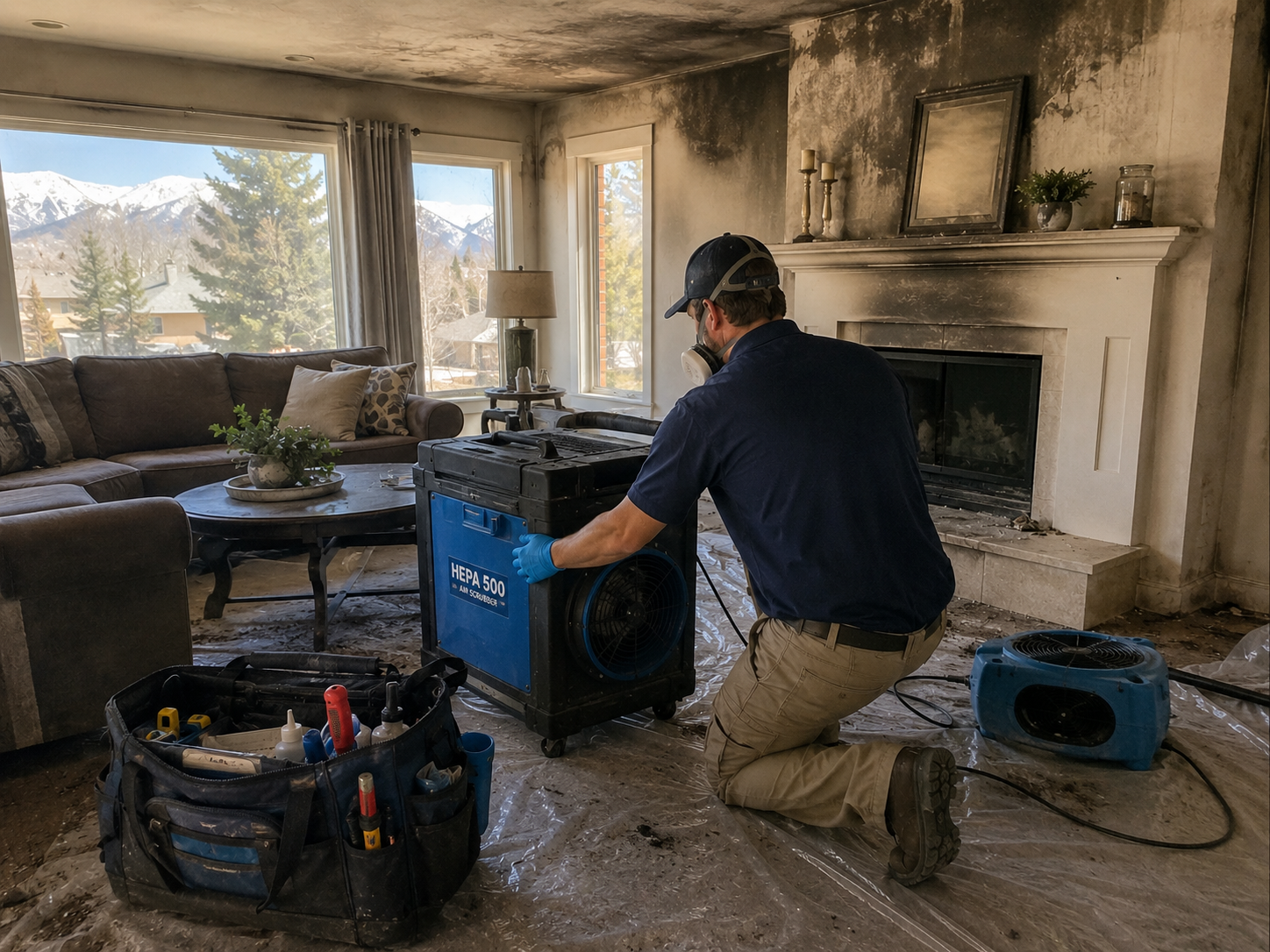
Professional mitigation relies on more than cleaning products. Air scrubbers with HEPA filtration pull smoke particles out of the air during the entire process, preventing residue from resettling on surfaces we have already cleaned.
Moisture meters check for hidden water damage from fire suppression efforts, since mold can start growing within 24 to 48 hours if that moisture goes unaddressed. Catching both smoke and moisture issues together prevents a second problem from developing on top of the first.
Thermal imaging cameras also help locate heat and moisture behind walls without needing to cut into drywall unnecessarily. This technology lets us target the actual affected areas instead of guessing where damage might be hiding.
Frequently Asked Questions
How quickly should smoke and fire mitigation start after a fire?
Ideally within the first 24 to 48 hours. Soot residue is acidic and becomes more damaging to surfaces the longer it sits untreated. Faster mitigation significantly improves the chances of saving materials that would otherwise need full replacement.
Can smoke damage affect rooms that were not near the fire?
Yes. Smoke travels through HVAC systems, ductwork, and small gaps around doors, often reaching rooms throughout the entire home. A full property assessment is necessary to catch damage in areas that look untouched at first glance.
Does homeowners insurance cover smoke and fire mitigation?
Most policies cover fire and smoke damage mitigation, though coverage details vary by policy and provider. Proper documentation, including photos and a professional mitigation report, significantly strengthens your claim and speeds up the approval process.
Why does my house still smell like smoke after I cleaned it myself?
DIY cleaning often fails to fully remove smoke odor. Standard household cleaners do not address residue trapped in porous materials like drywall, insulation, and fabric. Professional odor removal techniques work at a deeper level than surface cleaning can reach.
Is wildfire smoke damage different from structure fire damage?
Yes, in some ways. Wildfire smoke exposure can accumulate over time from poor air quality days. This happens even without a direct fire on the property. Structure fire damage, by contrast, tends to be more concentrated and immediate. Both require professional assessment to fully address.
What should I avoid doing immediately after a house fire?
Avoid touching soot covered surfaces with bare hands. Skip cleaning fabric or electronics yourself too. The HVAC system should also stay off until it has been checked for smoke contamination. These steps can spread damage further before professional mitigation begins.
If your home has experienced fire or smoke damage, do not wait to address it. Request a free estimate with Huskies Leak Detection and let our team start mitigation before the damage becomes permanent.